Author: Service Lifter

Invisalign for Teens

Invisalign TeensThere’s a new technology that’s (literally) putting a smile on plenty of young faces: A system of clear, removable aligners made especially for teens called Invisalign Teen®! If you (or a teenager you know) are a candidate for this treatment, you might find it’s the best fit for your lifestyle: It lets you eat what you want, makes it easier to clean your teeth — and best of all, it’s virtually invisible.

Is a clear aligner right for you? It all depends on what kind of orthodontic treatment you need. Traditional metal braces still work best in some situations — and you might be surprised to find that they’re still a popular option for many teenagers! But now that aligners are being designed specifically for teens, more are choosing them every day.

What is a clear aligner? Basically, it’s a thin plastic covering or “tray” that fits over your top and/or bottom teeth. You’ll wear a series of aligners that will gradually move your teeth into better positions. Here’s how they work: Each aligner is custom-made with the help of a computer program that takes into account exactly where your teeth are now, and how they need to be moved. You’ll wear each tray for two weeks or so, to shift your teeth slightly, and then you’ll go on to the next, which is slightly different. Over time, all of the small movements will add up to a big change!

A Clear Distinction
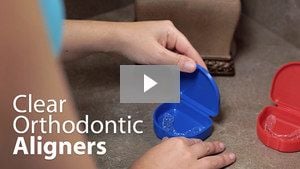
Clear Orthodontic Aligners Video

Your aligner is designed to be worn 22 hours a day, allowing you to take it off for meals or important social occasions. Yet even when you’re wearing it, it’s pretty hard for anyone else to tell it’s there — a big difference from metal braces! Plus, it offers other advantages that aren’t so easy to see.

One benefit of aligners over traditional braces is that they make your teeth easier to clean. Because they’re removable, there’s nothing to keep you from brushing and flossing everywhere in your mouth, just as you would without appliances. But brushing and flossing can be much harder to do around the brackets and wires of braces — and oral hygiene often suffers.

Some people also suffer irritation to the cheeks and gums from the metal parts of braces. Fortunately, the plastic of an aligner rarely causes that kind of problem. Plus, you won’t have to rush into the dental office to quickly fix a protruding wire or reattach a broken bracket. You won’t have to watch what you eat, either, because you’ll simply remove the aligner at mealtimes.

An Aligner Just for Teens

Clear aligners for adults have been available for over a decade, but until recently they weren’t recommended for teens in most cases. Why not? Chiefly, for two reasons: It was thought that teens wouldn’t always wear them for the recommended 22 hours per day; also, since many teens have some permanent teeth still erupting (emerging from below the gums), the precisely planned movement of the teeth might be disturbed.

Invisalign for TeensLuckily, technology has come to the rescue. The first problem is addressed by “compliance indicators” located on the aligners themselves. These colored dots fade over time as the aligners are worn in the mouth, showing whether or not you’ve followed the plan. To solve the second problem, aligners made especially for teens come with “eruption tabs” built in; they are designed to hold space for teeth that have not yet fully erupted.

Today, more people than ever — both adults and teens — are finding that clear aligners suit their needs best. Are you one of them?

Oral Hygiene for Kids

Teeth can last a lifetime if you take care of them right — and the best time to start is just as soon as they begin appearing. By establishing good oral hygiene routines for your children right from the start, you’ll give them the best chance of keeping their teeth healthy — forever.

Tooth decay, the major cause of dental trouble that can eventually lead to tooth loss, is actually an infectious disease caused by bacteria. If it takes hold, it can form a cavity in the enamel and then progress deeper into the tooth — causing discomfort, difficulty eating and speaking, and a need for fillings or root canal treatment. The good news is that tooth decay (also called caries) is completely preventable.

The primary route to good dental health is plaque removal. Plaque is the sticky, whitish film that builds up on teeth in the absence of effective oral hygiene. Decay-causing bacteria thrive in plaque, where they break down any sugar that lingers in the mouth. In the process, they produce acid byproducts that erode teeth. This is how a cavity begins. What are the most effective techniques for plaque removal and decay prevention? That depends on the age of your child.

Babies

Age one dental visit video

Babies can develop a form of tooth decay known as early childhood caries. This occurs when they are allowed to go to sleep with a bottle that’s filled with anything but water. The sugars in formula, milk (even breast milk) and juice can pool around the teeth and feed decay-causing bacteria. When it comes to bedtime soothing, a pacifier or bottle filled with water is safer for developing teeth — that is, until about age 3. At that point, sucking habits should be gently discouraged to prevent orthodontic problems from developing later on.

Brush your baby’s first teeth gently with a small, soft-bristled toothbrush, using just a thin smear of fluoride toothpaste, at least once a day at bedtime. Before a tooth is fully erupted, you can use a water-soaked gauze pad to clean around the tooth and gums.

Make sure your child has his or her first dental visit by age 1. There, you can learn proper hygiene techniques; have your youngster examined for signs of early decay; and get a recommendation for fluoride supplements if needed.

Children

Tooth tips for tots video

Starting at age 3, you can begin teaching your child to brush with a children’s toothbrush and no more than a pea-sized amount of fluoride toothpaste. But remember, children will need help with this important task until about age 6, when they have the fine motor skills to do an effective job themselves.

It’s also extremely important to start encouraging healthy dietary habits at this time. Your child will have less plaque buildup and decay if you place limits on soda and sugary snack consumption. As a parent, you can model this behavior to instill it in your child. After all, monkey see, monkey do! Any sugary treats that are allowed should come at mealtimes, not in between. This will ensure your child is not creating favorable conditions for oral bacteria to grow around the clock.

At your child’s regular, twice-yearly dental checkups and cleanings, topical fluoride can be applied to strengthen tooth enamel and make it more resistant to erosion and decay. If necessary, dental sealants can be applied to the back teeth (molars) to prevent food particles and bacteria from building up in the tiny grooves where a toothbrush can’t reach (View Dental Sealant Video).

Teens

At this point, your children have the primary responsibility for maintaining their day-to-day dental health — but you can continue to help them make good dietary and behavioral choices. These include drinking plenty of water and avoiding soda, sports drinks and energy drinks, all of which are highly acidic; avoiding tobacco and alcohol; and continuing to visit the dental office regularly for cleanings and exams. This is particularly important if your teen wears braces, which can make it more difficult to keep teeth clean.

Remember, it’s never too soon to help your child develop good oral hygiene habits that will last a lifetime.

Mouthrinses

Numerous studies have shown that using an appropriate mouth rinse, in conjunction with regular brushing and flossing, is an easy and effective way for you to improve your overall oral health. As part of a regular program of oral hygiene, mouth rinses (which are sometimes called mouthwashes) can be effective at reducing plaque, controlling bad breath, and helping to prevent tooth decay and gum disease. There is a myriad of mouth rinses lining the drugstore shelves, and they are available in both prescription and over-the-counter (OTC) formulations. Which one is best for you? That depends on what benefit you expect to get from using it.

It’s important to keep in mind that many off-the-shelf mouth rinses are primarily cosmetic: That means, they may (temporarily) make your mouth taste or smell good, but they don’t offer any lasting benefit to your oral health. There’s nothing wrong with that — as long as you weren’t expecting anything more. But if you’ve been told that you are at risk for tooth decay or gum disease, you’ll want to use a mouth rinse that has proven clinical benefits.

Therapeutic Mouth Rinses

Mouth rinses that offer oral-health benefits are considered therapeutic. These fall into two general categories: anti-cariogenic rinses, which are designed to prevent tooth decay (and thus dental caries, or “cavities”); and anti-bacterial rinses, which help control the buildup of plaque bacteria in your mouth. Some products may even offer both types of protection.

To help prevent tooth decay, anti-cariogenic mouth rinses use an ingredient you’re probably already familiar with: fluoride. This is often in the form of a .05% sodium fluoride solution. Because it’s a liquid, the rinse can get all around your teeth — even into spaces the smallest brush can’t reach.

Fluoride has been consistently proven to strengthen tooth enamel, which protects against decay; it can even reduce tiny lesions on teeth where a cavity may form. There’s hardly anyone who couldn’t use some extra help in the fight against cavities — but if you’ve been told you may be at a higher risk for tooth decay, or if you have difficulty brushing and flossing, then an anti-cariogenic rinse is a good choice for you.

Anti-bacterial mouth rinses generally contain ingredients (like triclosan, essential oils, or the prescription medication chlorhexidine) that help to control the microorganisms found in plaque. Plaque, a sticky, bacteria-laden biofilm, occurs not only on the surfaces of the teeth but also in other parts of the mouth. Rinsing with an anti-bacterial solution has been shown to provide a greater reduction in plaque than brushing and flossing alone. As tools in the fight against gum disease (gingivitis) and tooth decay, anti-bacterial mouth rinses may be a good step toward improving your oral hygiene.

Choosing A Mouth rinse

If you’re shopping for an over-the-counter therapeutic mouth rinse, look for the ADA (American Dental Association) seal on the label; it means that the product has been evaluated and proven effective by an independent panel of dental experts. If a mouth rinse has been prescribed for you, you should carefully follow the usage instructions. (Note, however, that due to labeling rules, prescription mouth rinses may not be eligible for the ADA seal.) Mouth rinses can benefit most people, but they generally aren’t recommended for children under the age of six, who may swallow them.